 Mirela PascuVIEW PROFILE →
The Great Bucharest Pastry War
At some point last weekend, more than a thousand people in Bucharest signed up on Facebook for an unusual form of civic action. The plan was to gather in front of one of the city's most fashionable addresses and eat, demonstratively, a cheese pastry that costs about as much as a bus ticket. History has seen marches, strikes and hunger protests.
Bucharest, a city with a sense of humor older than most of its institutions, invented the eating protest, and I would like to tell you how it got there, because underneath the flaky crust this is one of the cleanest brand stories of the year.
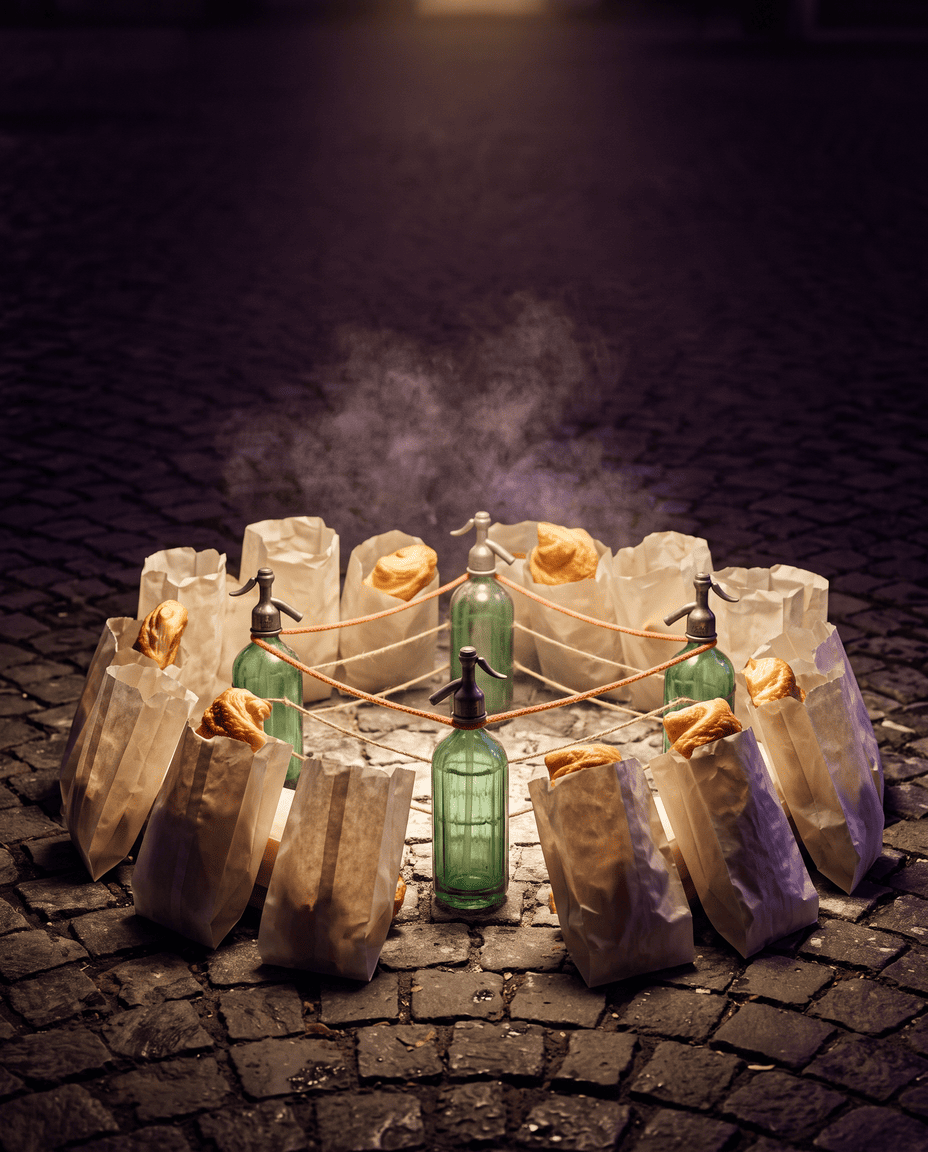
The pastry in question is called a merdenea. If you have never been to Romania, picture layered dough folded around salty cheese, made with margarine rather than butter, sold warm through small corner-shop windows to students, doctors, drivers and ministers alike. It is not fine dining and has never applied for the title.
At Nea Mihai's pastry shop in Amzei Square, an institution of the neighborhood, merdenele have been made since 1985, to a recipe brought from Tulcea, which in Romanian retail terms makes the place roughly as old as the free market itself.
One street corner away, about a hundred and fifty meters, stands La Mița Biciclista, a belle-époque building rescued and beautifully restored through the efforts of Edmond Niculușcă, an activist and entrepreneur to whom the city genuinely owes something, and which today hosts a premium food destination. On Friday, Niculușcă posted a video built on Brillat-Savarin's famous line, tell me what you eat and I shall tell you what you are.
The video, in loose translation, introduced a character we all supposedly know, a man convinced that the best pastry shop in the world is at Nea Mihai's, on the corner of his block, a man who appears to have tasted nothing in his life beyond margarine and cheap cheese crumbs. And then came the line that did the real damage, delivered with the calm of a field researcher, that this man is not alone in the world, he is a species.
The species heard the roll call and reported for duty. More than 1,600 comments piled up within hours, the slogan Je suis merdenea was born and needed no translation in any language, and by the next morning the queue outside Nea Mihai's window had grown to lengths the shop had never seen on an ordinary Saturday.
Somewhere in that crowd a protest was scheduled whose entire logistical requirement was pocket change, and whose banner, uniquely in the history of public dissent, could be eaten warm before the authorities arrived.
Here is what I think actually happened, and it has remarkably little to do with butter. Nobody in that queue was defending margarine, which needs no defenders and deserves few. They were answering a man with a microphone who had reached over a counter and graded their childhoods.
The sociologist Gelu Duminică put it better than anyone that week, observing that the dispute is not about pastry or culinary preference but about the way Romanians mock one another, and that in Romania any difference, even one of puff pastry, becomes a referendum on who we are. Snobbery, it turns out, remains the only luxury available on no budget whatsoever, which may be exactly why Amzei Square decided, last week, to issue it an invoice.
I want to be precise about my objection, because I make my living from sharp positions and I have no intention of joining the choir that discovered, overnight, that irony is violence. I defend polarization professionally. A brand that upsets nobody is a brand that has said nothing, and the fear of losing a single potential client has produced more beige communication than any shortage of talent ever did.
But a brand chooses its enemies from the shelf of ideas, from haste, from mediocrity, from food made with indifference, and the public will follow it into any of those battles. The moment the chosen enemy is the man queueing at the corner of the block, there is no strategy left in the building. There is only a costume drama about class, and audiences everywhere have an infallible eye for the costume.
The apology arrived quickly, and it deserves both credit and a closer reading. We thank everyone who flagged our derailment, we apologize to those we offended, wrote the two partners, in loose translation, naming the two values the video had trampled, good neighborliness and good taste, and Niculușcă added a personal plea for forgiveness addressed to Nea Mihai himself, which took a spine most public figures no longer own.
And yet the apology is also the most revealing document of the entire week, because I do not believe those two values ever lived in the company. They lived in the men the founders would like to be, and in the men they present to the city, two addresses where every one of us, without exception, is a wonderful neighbor with impeccable taste. What the street saw on Friday was the third man, the real one.
Playing the gap between who you are and whom you perform takes fresh energy every single day, the show runs without intermissions, and one unsupervised second in front of a camera is enough to bring down scenery that took years to paint.
That arithmetic is the part that stings me professionally, since building identities for companies is what I do between breakfast and dinner. Returning that building to the city took years of restoration, permits, scaffolding, specialists and patience with every ornament. Taking down the reputation attached to it took one minute of vertical video, and no office in Bucharest issues demolition permits for brands.
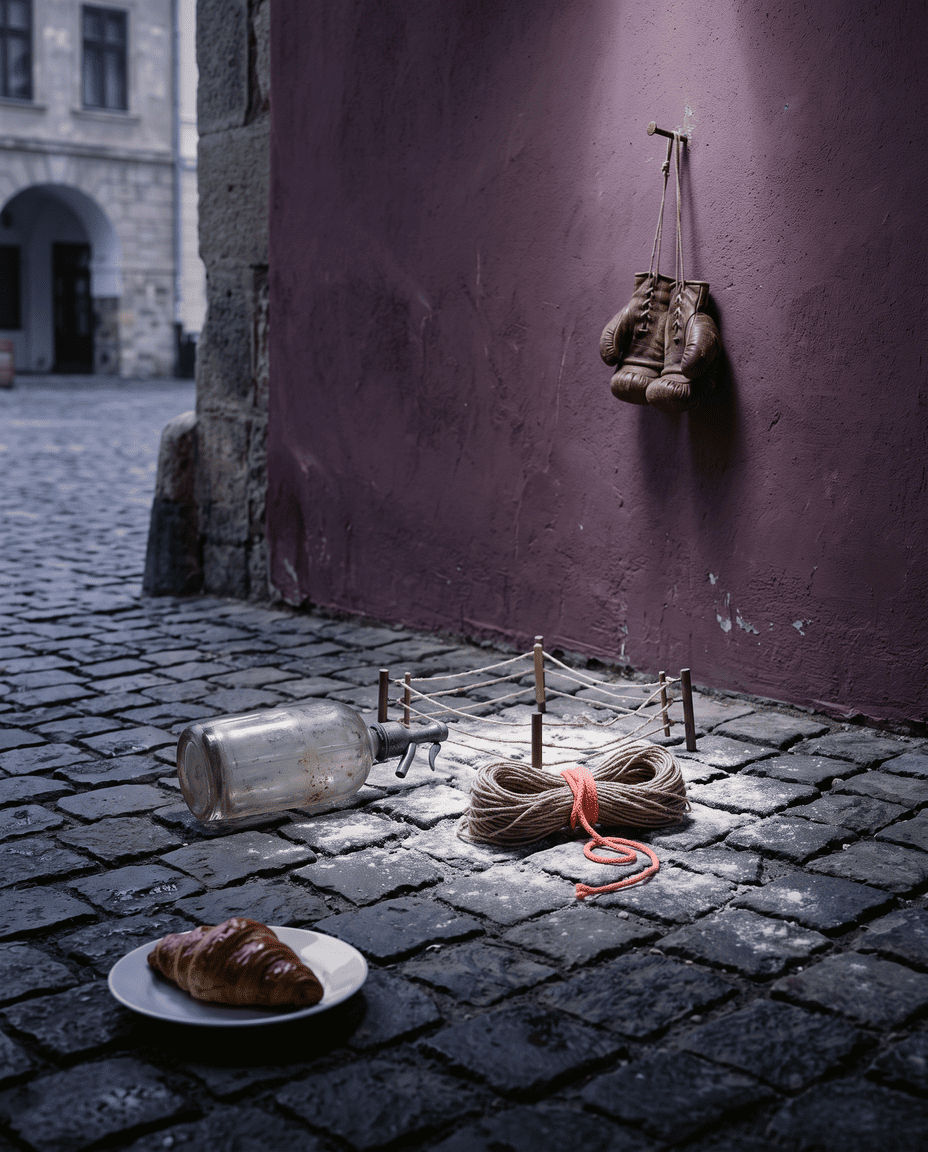
There will be cynics, there already are, asking with a knowing smile whether the whole thing was not, perhaps, a brilliant stunt, since everyone is now talking about both establishments. I find this the laziest character in the whole cast. Yes, the numbers grew, in precisely the way a fire alarm's numbers grow. Attention fell evenly on both sides of the street, and attention, contrary to the folklore of our industry, invents nothing.
On one side it found four decades of quiet consistency and converted them into free advertising. On the other side it found one unsupervised minute and projected it onto every screen in the country.
Which brings me to the only genuinely aristocratic performance of the week. George Gheorghe, the nephew of Nea Mihai, declined the entire spectacle, gave the scandal nothing and kept selling pastries, while the mayor of Bucharest closed the file with a line worth keeping, that he cannot imagine Bucharest without merdenele, but there is room for the croissant too. The finest manners of the week belonged, in the end, to the very man an entire video had invited the city to feel superior to.
Real class never touched a camera. It stood behind a counter, kept quiet and served the queue.
Brillat-Savarin, who has been quoted at both ends of this war, has earned a Bucharest amendment to his formula. Tell me whom you laugh at, and I shall tell you what your brand is. And since every company now walks around with a camera in its pocket and a founder full of opinions, perhaps the question worth taking home is not about pastry at all. When the next well-lit minute of inspiration finds you with the camera already rolling, what exactly stands between your brand and your mood?